How to Grow Poppy
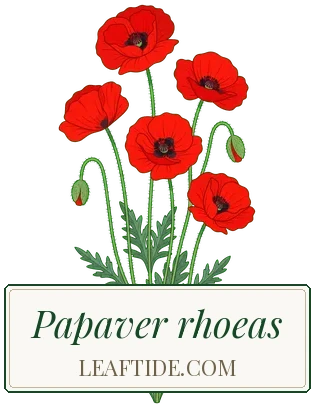
Papaver rhoeas
Poppies are hardy annuals that thrive in poor, well-drained soil and full sun. Always direct sow — they have a taproot and hate being moved. Scatter seeds on the surface and do not cover; they need light to germinate. Sow in autumn for earlier, stronger plants, or in early spring. Thin seedlings to 20 cm apart once large enough to handle. No feeding needed — rich soil produces leafy plants with fewer flowers. Deadhead to prolong blooming, or leave seed heads to self-sow for next year. Papaver somniferum also produces beautiful decorative seed pods for dried arrangements.
 In your Leaftide garden

- Hardiness
- Hardy
- Season
- Cool Season
- Harvest
- Continuous Harvest
- Spacing
- 20 cm
- Height
- 60 cm
- Min. soil temperature
- 5°C+
- Start from
- Seed
- Light
- Full sun to part shade
- Water
- Low
When to Start
Direct sow outdoors as soon as soil reaches 5°C — typically early to mid spring. Hardy enough to tolerate light frosts.
Don't know your frost date? Find it here →
Growth Stages
Approximate days from start
Care Essentials
- Not needed. Poppies thrive in poor, well-drained soil — feeding encourages lush leafy growth at the expense of flowers.
- Classic wildflower meadow plant. Surface sow — seeds need light to germinate, do not cover. Self-seeds prolifically and naturalises easily. Both Papaver rhoeas (field poppy) and Papaver somniferum (breadseed poppy) are covered by this entry. All parts except the ripe seeds contain alkaloids and are toxic to cats and dogs if eaten.
Growing Conditions
- Min. soil temperature
- 5°C+
- Germination temperature
- 10–15°C
Pet Safety
Spacing & Planting
| Plant spacing | 20 cm |
| Row spacing | 30 cm |
| Sow depth | 0 cm |
| Mature height | 60 cm |
| Mature spread | 30 cm |
Direct sow and thin. Poppies resent transplanting — always sow in situ. Closer spacing is tolerated but increases grey mould risk in damp conditions.
Pests & Diseases
Pest Aphids
Identification: Clusters of small green or black insects on shoot tips and flower buds, causing distorted growth and sticky honeydew.
- Blast off with a strong jet of water
- Spray with fatty acid-based insecticide
- Encourage ladybirds, lacewings and hoverflies
- Spray with a contact insecticide containing deltamethrin or lambda-cyhalothrin
Disease Downy Mildew
Symptoms: Yellow patches on upper leaf surfaces with a grey-white furry growth on the undersides; affected leaves wither and die.
Treatment: Remove and destroy affected leaves. Improve air circulation by thinning plants. Avoid overhead watering.
Prevention: Thin seedlings promptly to 20 cm apart; avoid dense sowings and waterlogged soil.
Disease Grey Mould (Botrytis)
Symptoms: Fluffy grey fungal growth on stems, leaves, and buds; affected tissue collapses and rots.
Treatment: Remove and destroy affected plant material immediately. Improve air circulation around plants.
Prevention: Thin to adequate spacing, avoid overhead watering, and do not leave dead plant material on the soil.
Growing Conditions
| Min. soil temperature | 5°C |
| Germination temperature | 10–15°C |
| Base growth temperature | 4°C |
| Min. daylength to start | 9h |
| Photoperiod sensitivity | day neutral |
Frequently Asked Questions
- How far apart should I plant Poppy?
- Plant Poppy 20cm apart with 30cm between rows.
- When does Poppy flower?
- Poppy typically flowers approximately 70 days after transplanting.
- Is Poppy frost hardy?
- Poppy is classified as Hardy.