How to Grow Peace Lily
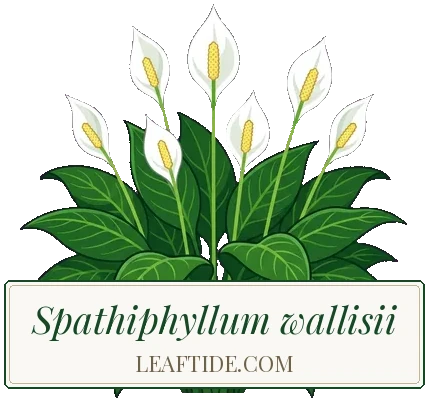
Spathiphyllum wallisii
Peace lily is one of the most rewarding low-light houseplants, producing elegant white spathes and tolerating conditions that would stress most other plants. It thrives in low to medium indirect light and prefers consistently moist soil — it will visibly droop when thirsty, which is a reliable watering signal. Use filtered or room-temperature water to avoid brown leaf tips from fluoride. It is toxic to cats and dogs, so place with care in pet households.
 In your Leaftide garden

- Height
- 60 cm
- Spread
- 45 cm
- Flowers
- April - October
- Light
- Bright indirect light
- Water
- High
- Feed
- Monthly in spring and summer
- Prune
- Remove spent flowers and yellowed leaves
Yearly Lifecycle
Care Essentials
Feed monthly with a diluted balanced liquid fertiliser from spring through summer. Reduce to every 6–8 weeks in autumn and stop feeding in winter.
Watch For
- Spider mites
- Mealybug
- Scale insects
- Root rot
- Brown leaf tips from fluoride in tap water
Pet Safety
Care Requirements
Light
Low to medium indirect light
Keep out of direct sun to avoid scorched leaves. Tolerates quite low light but flowers best with medium indirect brightness.
Watering
Keep soil consistently moist, not waterlogged
Water when the top 2 cm feels slightly dry. Use filtered or room-temperature water to prevent brown leaf tips from fluoride.
Fertilizing
Monthly in spring and summer
Feed monthly with a diluted balanced fertiliser in spring and summer. Reduce to every 6-8 weeks in autumn and withhold entirely in winter.
Pruning
Remove spent flowers and yellowed leaves
Cut spent flower spathes and yellowed leaves at the base to keep the plant tidy and encourage new growth.
Humidity
Prefers 50% or higher humidity
Brown leaf tips are caused by dry air or fluoride in tap water. Use filtered water and mist occasionally, or stand on a pebble tray with water.
Growing Tips
Use filtered water
Use filtered or room-temperature water to avoid brown leaf tips caused by fluoride in tap water.
Drooping is a watering signal
The plant droops visibly when thirsty — this is a reliable watering signal, not a crisis. It recovers quickly once watered.
Toxic to pets
Toxic to cats and dogs — place out of reach in pet households.
Keep leaves clean
Wipe leaves regularly with a damp cloth to remove dust and maximise light absorption.
Pests & Diseases
Pest Spider Mite
Identification: Tiny sap-sucking mites that cause fine stippling on leaves and spin webbing in hot, dry conditions.
- Increase humidity and mist the foliage regularly.
- Treat with insecticidal soap or neem oil spray, covering the leaf undersides.
Pest Mealybug
Identification: White cottony clusters at leaf axils and stem joints, sucking plant sap and weakening growth.
- Dab colonies with a cotton swab dipped in rubbing alcohol.
- Spray with insecticidal soap, repeating weekly until clear.
Pest Scale Insects
Identification: Brown shell-like bumps on stems and leaf undersides that suck sap and excrete sticky honeydew.
- Scrape off by hand or with a soft brush.
- Treat with neem oil or insecticidal soap.
- Use a systemic insecticide for heavy infestations.
Disease Root Rot
Symptoms: Roots turn brown and mushy, and the leaves yellow and collapse. Caused by overwatering or poorly draining soil.
Treatment: Remove the affected roots, repot in fresh well-draining mix and reduce how often you water.
Prevention: Use a pot with drainage holes and water only when the top 2 cm of compost feels slightly dry. Never leave the pot standing in water.
Disease Cylindrocladium Leaf Blight Cylindrocladium spathiphylli
Symptoms: Fungal disease causing brown spots or blight on the leaves, often spreading in warm, humid conditions.
Treatment: Remove affected leaves promptly and apply a copper-based fungicide if it keeps spreading.
Prevention: Improve air circulation, keep the foliage dry when watering and avoid crowding plants together.