How to Grow Paulownia
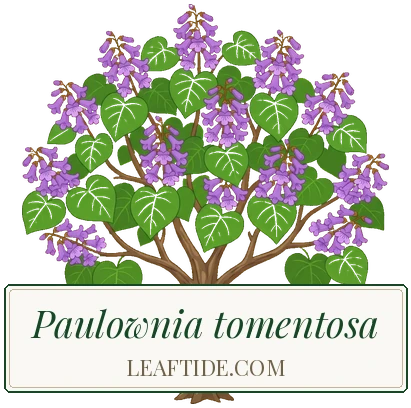
Paulownia tomentosa
Plant in full sun in any well-drained soil. Paulownia is extremely fast-growing and tolerates poor conditions. Protect flower buds from late frost in cold areas. Can be coppiced annually for dramatic oversized foliage instead of flowers.
 In your Leaftide garden

- Height
- 1000 cm
- Spread
- 800 cm
- Flowers
- April
- Light
- Full sun
- Water
- Low
- Feed
- Rarely needed on fertile soils
- Prune
- Prune in late winter while dormant
Yearly Lifecycle
Care Essentials
Rarely needed once established. Young trees benefit from a balanced feed in spring for the first 2-3 years. Coppiced specimens appreciate a nitrogen-rich mulch in spring to fuel rapid regrowth.
Watch For
- Honey fungus
- Frost damage to flower buds
- Wind damage to large leaves
- Paulownia witches' broom virus
Companions
Hostas, Ferns, Brunnera, Hellebores
Care Requirements
Light
Full sun essential
Full sun is essential for vigorous growth and flowering; plants in shade produce poor flowers and leggy growth.
Watering
Drought-tolerant once established
Water deeply and regularly throughout the first two growing seasons to encourage deep rooting.
Fertilizing
Rarely needed on fertile soils
Apply a nitrogen-rich mulch (e.g. well-rotted manure) around coppiced stools in spring to fuel rapid re-growth.
Pruning
Prune in late winter while dormant
Coppice to near ground level every 1-2 years for ornamental foliage; leave unpruned for flowers.
Overwintering
Hardy to -15 C once established
Protect young plants (first 2-3 winters) from hard frost with fleece or thick mulch. Flower buds are the most frost-sensitive part.
Growing Tips
Coppice or Flower — Choose One
Coppicing produces enormous leaves (up to 60 cm) but sacrifices flowers; choose your management style deliberately.
Protect Flower Buds from Late Frost
Flower buds form in autumn and are vulnerable to spring freezes; protect them with fleece in cold regions.
Extremely Fast-Growing
Grows 3–5 m per year when coppiced; site carefully to avoid shading neighbours.
Precocious Flowering
Blooms appear before the leaves emerge, giving a spectacular spring display even on bare branches.
Pests & Diseases
Pest Leaf Miner
Identification: Larvae tunnel inside leaves, creating pale winding trails visible on the upper surface. Rarely fatal but disfigures foliage.
- Remove and destroy affected leaves promptly to break the life cycle
- Encourage natural predators such as parasitic wasps
- Apply a systemic insecticide as a last resort in severe infestations
Pest Aphids
Identification: Clusters of small soft-bodied insects on new shoots and leaf undersides, causing distorted growth and sticky honeydew.
- Blast colonies off with a strong jet of water
- Encourage ladybirds, lacewings, and parasitic wasps
- Apply insecticidal soap or neem oil spray if colonies persist
Pest Vine Weevil
Identification: Adults notch leaf margins; larvae feed on roots underground and can kill young plants, especially those in containers.
- Apply pathogenic nematodes (Steinernema kraussei) to moist soil in late summer
- Check under pots and gritty mulch for adult beetles at night and hand-pick
- Use vine weevil biological controls as a preventive measure for containerised specimens
Disease Honey Fungus Armillaria spp.
Symptoms: Sudden wilting and dieback. White mycelial fan sheets under bark near the base are diagnostic.
Treatment: No chemical cure; remove and destroy infected plants including as many roots as possible. Improve drainage.
Prevention: Choose resistant species if replanting the same spot. Avoid waterlogged soils.
Disease Witches' Broom (Phytoplasma) Candidatus Phytoplasma spp.
Symptoms: Dense clusters of stunted shoots, distorted flowers, and general decline. Spread by leafhoppers.
Treatment: No cure; prune out affected branches well below visible symptoms and sterilise tools between cuts.
Prevention: Control leafhopper populations. Remove severely affected trees to prevent local spread.