How to Grow Midgen Berry
Austromyrtus dulcis
Midgen Berry is a low-maintenance Australian native evergreen shrub that produces sweet, edible white berries. Plant in full sun to part shade in well-drained, slightly acidic soil. Mulch well to retain moisture, water regularly during dry spells, and feed sparingly with a low-phosphorus native plant fertiliser in spring. It tolerates light frosts once established and makes an excellent low hedge or container plant.
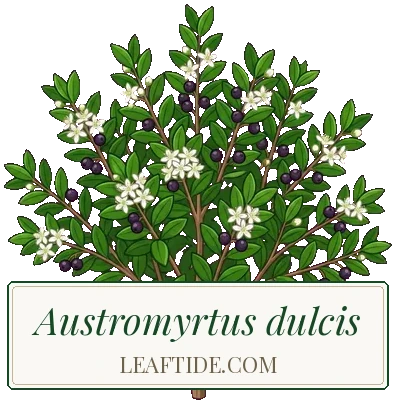
 In your Leaftide garden

- Height
- 200 cm
- Spread
- 200 cm
- Harvest
- August - September
- Light
- Full sun to part shade
- Water
- Moderate
- Feed
- Low-phosphorus native plant fertiliser in spring
- Prune
- Light tidy in late winter
Yearly Lifecycle
Care Essentials
Spring with a balanced slow-release fertiliser. Organic compost or native plant food is ideal. Avoid high-phosphorus feeds which can damage Australian natives.
Watch For
- Aphids
- Mealybugs
- Scale insects
- Root rot in waterlogged soil
Companions
Lilly Pilly, Grevillea, Native grasses, Lomandra
Care Requirements
Light
Full sun to part shade
Thrives in at least 6 hours of direct sun for best berry production. Tolerates light afternoon shade, especially in hotter climates. Deep shade reduces flowering and fruiting.
Watering
Moderate; allow to dry slightly between waterings
Water regularly during dry spells, especially when young. Once established, Midgen Berry is reasonably drought-tolerant. Avoid waterlogged conditions as root rot can occur.
Fertilizing
Low-phosphorus native plant fertiliser in spring
Apply a balanced, low-phosphorus fertiliser or native plant food once in spring. Avoid standard high-phosphorus garden fertilisers which can harm Australian natives. Well-composted organic matter is a safe alternative.
Pruning
Light tidy in late winter; shape after harvest
Remove dead or crossing branches in late winter. The plant can be lightly trimmed into a hedge shape after fruiting. Avoid hard pruning as it removes next season's fruit buds.
Spacing
60–90 cm for hedging; 1–1.5 m for specimens
Space more closely for a dense low hedge effect. Allow wider spacing for individually shaped specimen plants. Suits containers with at least 40 cm diameter.
Support
No support needed
Midgen Berry is a self-supporting compact shrub that requires no staking or tying. It holds its shape naturally and can be lightly pruned to maintain a tidy form.
Growing Tips
Low-phosphorus feed only
Australian natives like Midgen Berry are sensitive to high phosphorus. Use native plant fertiliser or well-composted organic matter. Standard garden fertilisers can cause nutrient burn and poor growth.
Harvest quickly
Ripe berries are soft, white, and grey-blotched. They deteriorate within 24–48 hours of picking, so harvest in small amounts and use fresh, or freeze immediately for later use.
Works as a low hedge
Midgen Berry responds well to light shaping and is often trained as a low-growing hedge or border plant. Trim lightly after harvest each year to keep it compact.
Mulch to mimic native habitat
This plant naturally grows on sandy coastal soils with a thick leaf litter layer. A generous organic mulch replicates this and reduces watering frequency significantly.