How to Grow Lipstick Plant
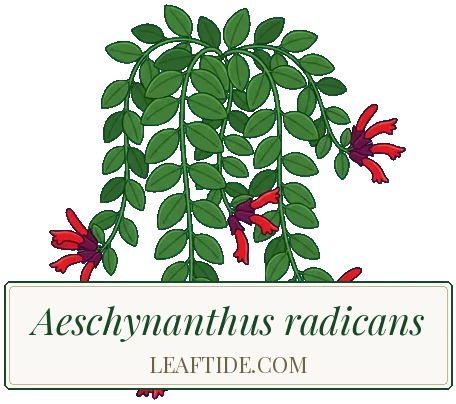
Aeschynanthus radicans
Lipstick plant is a trailing tropical houseplant grown for its glossy dark foliage and striking tubular red flowers that emerge from dark maroon calyces — the effect that gives it its name. It thrives in bright indirect light and needs high humidity to flower reliably. Allow the top layer of soil to dry between waterings, and keep it slightly pot-bound to encourage blooming. It makes an excellent hanging basket plant and rests in winter, resuming growth in spring.
 In your Leaftide garden

- Height
- 30 cm
- Spread
- 90 cm
- Flowers
- May - July
- Light
- Bright indirect light
- Water
- Moderate
- Feed
- Monthly in spring and summer
- Prune
- Trim after flowering to maintain shape
Yearly Lifecycle
Care Essentials
Feed monthly with a diluted balanced liquid fertiliser from spring through summer when actively growing. Reduce to every 6–8 weeks in autumn and stop feeding in winter.
Watch For
- Spider mites in dry conditions
- Mealybug at leaf axils
- Root rot from overwatering
- Botrytis in cool damp conditions
- Leaf drop from cold draughts
Care Requirements
Light
Bright indirect light
Place in bright indirect light — an east or west-facing window is ideal. Insufficient light is the main reason the plant fails to flower. Avoid direct afternoon sun which scorches the glossy leaves.
Watering
Allow top layer to dry between waterings
Water when the top 2–3 cm of compost feels dry. Use room-temperature water. Reduce watering in winter during dormancy but never let the root ball dry out completely.
Fertilizing
Monthly in spring and summer
Feed monthly with a diluted balanced liquid fertiliser from spring through summer. Reduce in autumn and stop entirely in winter.
Pruning
Trim after flowering to maintain shape
Pinch back long stems after a flush of flowering to encourage bushy growth and further blooms. Remove any dead or damaged growth at any time.
Humidity
High humidity preferred
Thrives with humidity above 50%. Mist the foliage regularly or stand the pot on a pebble tray with water. Low humidity in winter heating can trigger leaf drop and inhibit flowering.
Growing Tips
Keep it slightly pot-bound
Lipstick plant blooms most freely when its roots are lightly crowded. Repot only when roots visibly escape the drainage holes — moving to a larger pot too soon delays flowering.
Bright light triggers blooming
Without enough bright indirect light the plant stays vegetative. An east or west-facing window works well. Avoid harsh afternoon sun which can scorch the leaves.
High humidity matters
Mist regularly or stand the pot on a pebble tray filled with water to raise humidity. Dry air slows flowering and encourages spider mites.
Don't overwater
Allow the top 2–3 cm of compost to dry between waterings. The most common cause of decline is waterlogged roots leading to root rot.
Pests & Diseases
Pest Spider Mite
Identification: Tiny sap-sucking mites causing fine stippling on leaves and webbing, worst in hot dry conditions.
- Increase humidity, mist foliage, and treat with insecticidal soap or neem oil
Pest Mealybug
Identification: White cottony clusters at leaf axils sucking sap and weakening the plant.
- Dab with rubbing alcohol on a cotton swab or spray with insecticidal soap
Disease Root Rot
Symptoms: Caused by overwatering; roots become brown and mushy, stems wilt and leaves yellow.
Treatment: Remove rotted roots, repot in fresh well-draining mix, and reduce watering frequency.
Prevention: Use free-draining compost and a pot with drainage holes; let the top layer dry before watering and never leave the pot standing in water
Disease Botrytis Grey Mould Botrytis cinerea
Symptoms: Fluffy grey mould on stems or flowers in cool damp conditions with poor airflow.
Treatment: Remove affected parts, improve ventilation, and reduce humidity around the foliage.
Prevention: Give plants room for airflow, water at the base, and remove dead flowers and leaves promptly