How to Grow Foxglove
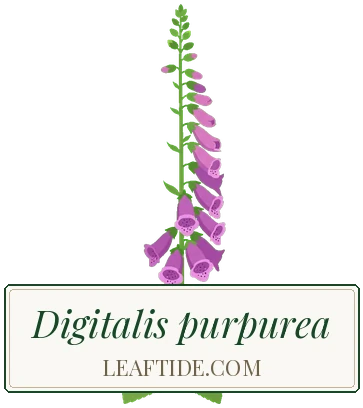
Digitalis purpurea
Foxgloves are tall, dramatic biennials that flower in their second year with towering spikes of tubular blooms in pink, purple, or white. They thrive in partial shade with moist, well-drained soil and are ideal for woodland-style borders. Note that all parts are highly toxic — always wear gloves when handling, and keep away from children and pets.
 In your Leaftide garden
 - Hardiness
- Hardy
- Season
- Any Season
- Harvest
- Continuous Harvest
- Spacing
- 30 cm
- Height
- 150 cm
- Min. soil temperature
- 8°C+
- Start from
- Seed
- Light
- Full sun to part shade
- Water
- Moderate
When to Start
Sow from late spring to midsummer, in trays or where it is to flower. It only grows leaves in its first year and flowers the following spring or summer.
Don't know your frost date? Find it here →
Growth Stages
Approximate days from start
Care Essentials
- Apply a balanced slow-release fertiliser at planting time. Foxgloves are light feeders and do not need regular feeding — too much nitrogen produces lush foliage at the expense of flower spikes.
- All parts of foxglove are highly toxic — wear gloves when handling and keep away from children and pets. Foxgloves are biennial, flowering in their second year. Allow a few plants to set seed for natural self-sowing, or deadhead promptly to prevent unwanted spread.
Growing Conditions
- Min. soil temperature
- 8°C+
- Germination temperature
- 15–20°C
Pet Safety
- When to Start
- Sow from late spring to midsummer, in trays or where it is to flower. It only grows leaves in its first year and flowers the following spring or summer.
Want your full season plan with reminders? Set up your garden free


Spacing & Planting
| Plant spacing | 30 cm |
| Row spacing | 45 cm |
| Sow depth | 0 cm |
| Mature height | 150 cm |
| Mature spread | 45 cm |
Pests & Diseases
Pest Foxglove Aphid
Identification: Clusters of pale yellow-green aphids on stems, leaf undersides, and flower spikes; leaves may curl or distort.
- Blast off with a strong jet of water.
- Apply insecticidal soap or neem oil spray to infested stems and spikes.
- Pyrethrin-based contact insecticide as a last resort — avoid spraying open flowers.
Pest Slugs and Snails
Identification: Irregular holes in leaves and stems of seedlings and young rosettes; slime trails visible in the morning.
- Apply copper barrier tape around container-grown plants.
- Hand-pick at night or after rain.
- Use biological nematode control (Phasmarhabditis hermaphrodita) in moist soil from spring.
- Iron phosphate slug pellets (wildlife-safe) scattered sparingly around young plants.
Disease Leaf Spot Ramularia and Phyllosticta spp.
Symptoms: Brown or tan circular spots with a darker border on leaves; spots may merge in severe cases.
Treatment: Remove and bin (do not compost) affected leaves. Improve air circulation by thinning crowded plants.
Prevention: Avoid overhead watering; water at the base in the morning. Space plants adequately at 30–45 cm.
Disease Powdery Mildew Erysiphe spp.
Symptoms: White powdery coating on upper leaf surfaces; affected leaves may yellow and drop prematurely.
Treatment: Remove badly affected leaves. Apply a dilute solution of bicarbonate of soda or potassium bicarbonate spray.
Prevention: Ensure good air circulation; avoid planting in hot dry positions; keep soil consistently moist.
Growing Conditions
| Min. soil temperature | 8°C |
| Germination temperature | 15–20°C |
| Base growth temperature | 5°C |
| Min. daylength to start | 10h |
| Photoperiod sensitivity | day neutral |
Frequently Asked Questions
- How far apart should I plant Foxglove?
- Plant Foxglove 30cm apart with 45cm between rows.
- When does Foxglove flower?
- Foxglove flowers the year after sowing. It spends its first year growing leaves and flowers the following spring or summer.
- Is Foxglove frost hardy?
- Foxglove is classified as Hardy.