How to Grow Western Red Cedar
Thuja plicata
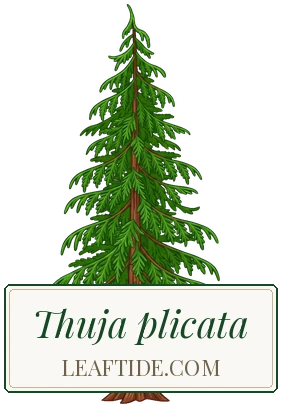
Western red cedar (Thuja plicata) is a fast-growing evergreen conifer from western North America with glossy, pineapple-scented foliage in drooping sprays and red-brown, stringy bark. It forms a tall, narrow cone, reaching 20 m or more in gardens, and also makes a dense hedge that takes clipping. Plant it in sun or shade in moist but well-drained soil; it copes with clay and damp ground better than most conifers but not with waterlogging. Water young plants in dry spells for the first two or three years. Trim hedges twice a year and only into green growth, never into bare brown wood. All parts are toxic if eaten.
 In your Leaftide garden

- Height
- 2000 cm
- Spread
- 600 cm
- Light
- Full sun to part shade
- Water
- Moderate
- Feed
- Rarely needed
- Prune
- Light formative pruning
Yearly Lifecycle
Care Essentials
Established western red cedars rarely need feeding. Young trees and new hedges benefit from a balanced slow-release fertiliser in spring for the first two or three years after planting. Avoid feeding after midsummer, which pushes soft growth into autumn.
Watch For
- Thuja blight (Didymascella thujina): brown, dying scale leaves on young plants in damp weather
- Cypress aphid: patches of foliage turning brown from the inside, mostly on hedges
- Honey fungus at the base (Armillaria)
- Phytophthora root rot in poorly drained sites
Pet Safety
Care Requirements
Light
Full sun to shade
Grows densest and fastest in full sun but tolerates more shade than most large conifers, including under taller trees. Hedges in deep shade become thinner.
Watering
Moist but well-drained soil
Water well for the first 2-3 seasons while roots establish. Established trees cope with average rainfall but prefer moist soil; hedges may need water in long dry spells, which can cause browning.
Fertilizing
Rarely needed
Young trees and new hedges benefit from a slow-release balanced fertiliser in spring for the first 2-3 years. Established trees need no feeding; overfeeding causes soft, vulnerable growth.
Pruning
Light formative pruning; hedges twice a year
Shape young trees lightly in spring to early summer, keeping a single leader. Trim hedges in late spring and late summer. Cut only into green growth, as it rarely regrows from bare brown wood.
Overwintering
Fully hardy
Fully hardy across the UK and most of Europe. Young trees in exposed spots may need a stake for the first 2-3 winters. Heavy snow can splay hedges, so knock it off after heavy falls.
Growing Tips
Only cut into green growth
Like other thujas, western red cedar rarely regrows from bare brown wood. Trim hedges little and often so you never need to cut back hard.
A tree or a hedge, decide at planting
Left alone it becomes a 20 m tree with a 6 m spread. As a hedge, plant 60-90 cm apart and start trimming the sides from the first year, letting the top reach the height you want before cutting it.
Happy in shade and heavy soil
Western red cedar tolerates shade, clay and moist ground better than most large conifers, so it suits spots where pines and true cedars struggle. Avoid ground that stays waterlogged.
Wear gloves when trimming
The foliage contains thujone and its sap can irritate sensitive skin. Wear gloves and long sleeves when clipping, and keep clippings away from pets and livestock.
Pests & Diseases
Pest Cypress Aphid
Identification: Large grey-brown aphids clustered on stems deep inside the foliage; patches of foliage turn yellow then brown from the inside out in late spring and summer; sticky honeydew and sooty mould.
- Check inside hedges from late spring and hose off or squash colonies early; encourage ladybirds, lacewings and birds.
- Most browned patches green over slowly once the aphids have gone; cut out only dead shoots.
- Spray a contact insecticide containing natural pyrethrins or fatty acids into the centre of the plant as soon as colonies are seen.
Pest Conifer Spinning Mite
Identification: Fine webbing on the foliage; scale leaves turn dull, mottled and bronze, worst in hot, dry summers.
- Hose the foliage in dry weather to raise humidity, and water hedges in drought.
- Spray with fatty acids or plant oils, repeating as the label directs, covering the inside of the foliage.
Disease Thuja Blight Didymascella thujina
Symptoms: Individual scale leaves turn brown in spring and summer, then small dark fruiting bodies appear and drop out, leaving pits; whole shoots can brown on young plants.
Treatment: Cut out and destroy badly affected shoots and clear fallen debris. Young plants usually grow out of it.
Prevention: Space plants for good airflow, avoid overhead watering and buy healthy, vigorous plants. It is mainly a problem on young plants under 4-5 years old.
Disease Honey Fungus Armillaria mellea
Symptoms: Crown dieback; honey-coloured toadstools at the base in autumn; white fungal fans under the bark; black bootlace-like strands in the soil.
Treatment: No cure. Remove dead trees and as much root as possible, and do not replant with susceptible species.
Prevention: Keep trees vigorous, avoid damaging the trunk base, and remove old stumps nearby; physical root barriers can slow spread.
Disease Phytophthora Root Rot Phytophthora cinnamomi
Symptoms: Progressive thinning; foliage yellows then browns from the inside out; dark staining at the root collar; whole hedge plants die in sections.
Treatment: No reliable cure for large plants. Improve drainage and avoid compacting the soil over the root zone.
Prevention: Plant in well-drained soil, avoid waterlogging, and do not pile soil or mulch against the trunk.