How to Grow Calendula
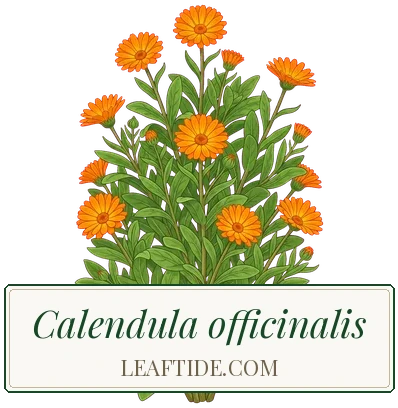
Calendula officinalis
Calendula (pot marigold) is a hardy annual that thrives in full sun and well-drained soil, even if poor. Direct sow in spring or autumn for early blooms. Plants self-seed freely; deadhead to prolong flowering or leave some heads for reseeding. Water during prolonged droughts but avoid rich feeding, which encourages lush foliage over flowers. Excellent as a companion plant; petals are edible. Protect young seedlings from slug damage.
 In your Leaftide garden
 - Hardiness
- Hardy
- Season
- Cool Season
- Harvest
- Continuous Harvest
- Spacing
- 25 cm
- Height
- 50 cm
- Sow depth
- 1 cm
- Min. soil temperature
- 5°C+
- Start from
- Seed
- Light
- Full sun to part shade
- Water
- Low
When to Start
Direct sow outdoors as soon as soil reaches 5°C — typically early to mid spring. Can also be started indoors 4 weeks earlier for a head start.
Don't know your frost date? Find it here →
Growth Stages
Approximate days from start
Care Essentials
- Rarely needed. Thrives in poor to moderate soil.
- Also called pot marigold. Edible flowers and medicinal uses. One of the easiest annuals to grow.
Growing Conditions
- Min. soil temperature
- 5°C+
- Germination temperature
- 15–20°C
Pet Safety
- Sow indoors
- —
- Transplant out
- —
- First harvest
- —
Want your full season plan with reminders? Set up your garden free


Spacing & Planting
| Plant spacing | 25 cm |
| Row spacing | 30 cm |
| Sow depth | 1 cm |
| Mature height | 50 cm |
| Mature spread | 35 cm |
Also known as Pot Marigold. Readily self-seeds but is not invasive. Thin seedlings to this spacing.
Pests & Diseases
Pest Aphids
Identification: Clusters of small green or black insects on stems and around flower buds, sticky honeydew, distorted growth
- Strong jet of water to dislodge
- Insecticidal soap spray
- Encourage ladybirds and hoverflies — calendula naturally attracts beneficial insects
- Fatty acid sprays
Pest Slugs and Snails
Identification: Seedlings eaten at ground level, irregular holes in young leaves, slime trails
- Beer traps
- Copper tape around pots
- Evening hand-picking
- Ferric phosphate slug pellets
Disease Powdery Mildew Golovinomyces cichoracearum
Symptoms: White powdery coating on leaves and stems, leaves yellow and die prematurely
Treatment: Remove badly affected leaves, improve air circulation
Prevention: Avoid overcrowding, water at soil level, pull out and replace severely affected plants
Disease Cucumber Mosaic Virus
Symptoms: Mottled yellow and green leaves, stunted growth, distorted flowers
Treatment: No cure — remove and destroy affected plants promptly to prevent spread
Prevention: Control aphids which spread the virus, remove infected plants immediately
Disease Downy Mildew
Symptoms: Yellow patches on the upper leaf surface with grey fuzzy growth underneath
Treatment: Remove and destroy affected leaves. Improve air circulation
Prevention: Avoid overhead watering, space plants well and clear plant debris
Growing Conditions
| Min. soil temperature | 5°C |
| Germination temperature | 15–20°C |
| Base growth temperature | 4°C |
| Min. daylength to start | 8.5h |
| Photoperiod sensitivity | day neutral |
Frequently Asked Questions
- How far apart should I plant Calendula?
- Plant Calendula 25cm apart with 30cm between rows.
- When does Calendula flower?
- Calendula typically flowers approximately 50 days after transplanting.
- Is Calendula frost hardy?
- Calendula is classified as Hardy.