How to Grow Aubergine
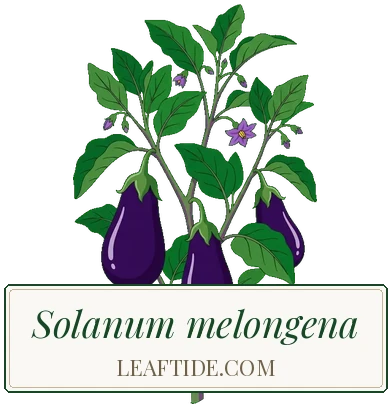
Solanum melongena
Aubergines demand heat, sun, and a long season—start indoors and grow on in a greenhouse or the warmest, sunniest outdoor spot. Aim for at least five months from sowing to harvest with even moisture and regular feeding. Support stems, pinch the tip to encourage branching, and thin fruit if plants are overloaded. Outdoors crops are weather-dependent; under cover gives more reliable yields.
 In your Leaftide garden
 - Hardiness
- Tender
- Season
- Warm Season
- Harvest
- Continuous Harvest
- Spacing
- 45 cm
- Height
- 80 cm
- Sow depth
- 0.5 cm
- Min. soil temperature
- 10°C+
- Start from
- Seed
- Light
- Full sun
- Water
- Moderate
When to Start
Start seeds indoors 9 weeks before your last frost date. Transplant outdoors once night temperatures stay above 10°C and soil has warmed to at least 10°C.
Don't know your frost date? Find it here →
Growth Stages
Approximate days from start
Care Essentials
- High-potash liquid feed weekly once first fruits set.
- Needs consistent warmth — one of the most heat-demanding crops. Mist flowers to aid pollination.
Companion Planting
Pepper, Spinach
Growing Conditions
- Min. soil temperature
- 10°C+
- Germination temperature
- 21–30°C
Pet Safety
- Sow indoors
- —
- Transplant out
- —
- First harvest
- —
Want your full season plan with reminders? Set up your garden free


Spacing & Planting
| Plant spacing | 45 cm |
| Row spacing | 45 cm |
| Sow depth | 0.5 cm |
| Mature height | 80 cm |
| Mature spread | 60 cm |
Also known as Eggplant. Plants require support/staking. Good air circulation is important.
Companion Planting
Grows well with
Aubergines and peppers share the same warmth and water requirements, making them efficient bed-mates that compete minimally for resources. Both benefit from the same feeding regime, simplifying care.
▼Spinach forms a living mulch beneath aubergines, suppressing weeds and retaining soil moisture through its dense, low-growing canopy. It tolerates the partial shade cast by tall aubergine plants.
▼Keep away from
As fellow nightshades, aubergines and potatoes share pathogens like Verticillium wilt and late blight, which can persist in soil and transfer easily between them. Keep at least 1m apart and avoid planting in the same bed in consecutive years.
▼Pests & Diseases
Pest Red Spider Mite
Identification: Fine webbing, yellowing speckled leaves, thrives in hot dry greenhouse conditions
- Increase humidity
- Biological control (Phytoseiulus persimilis)
- Regular misting
- Approved miticides
Pest Glasshouse Whitefly
Identification: Small white flying insects, sticky honeydew on leaves
- Yellow sticky traps
- Biological control (Encarsia formosa)
- Systemic insecticides
Pest Aphids
Identification: Small insects clustered on shoots and on leaf undersides
- Insecticidal soap
- Encourage ladybirds and lacewings
- Approved systemic insecticide
Disease Grey Mould (Botrytis) Botrytis cinerea
Symptoms: Fuzzy grey mould on stems, leaves or fruits
Treatment: Improve air circulation, remove affected parts
Prevention: Good ventilation, avoid overwatering, remove dead material promptly
Disease Verticillium Wilt Verticillium dahliae
Symptoms: Wilting of lower leaves, yellowing on one side of the plant
Treatment: No effective treatment. Remove affected plants
Prevention: Crop rotation. Use fresh compost every year
Growing Conditions
| Min. soil temperature | 10°C |
| Germination temperature | 21–30°C |
| Base growth temperature | 10°C |
| Min. daylength to start | 11h |
| Photoperiod sensitivity | day neutral |
Frequently Asked Questions
- How far apart should I plant Aubergine?
- Plant Aubergine 45cm apart with 45cm between rows.
- When can I harvest Aubergine?
- Aubergine is ready to harvest approximately 85 days after transplanting.
- What grows well with Aubergine?
- Aubergine grows well with pepper, spinach.
- Is Aubergine frost hardy?
- Aubergine is classified as Tender.