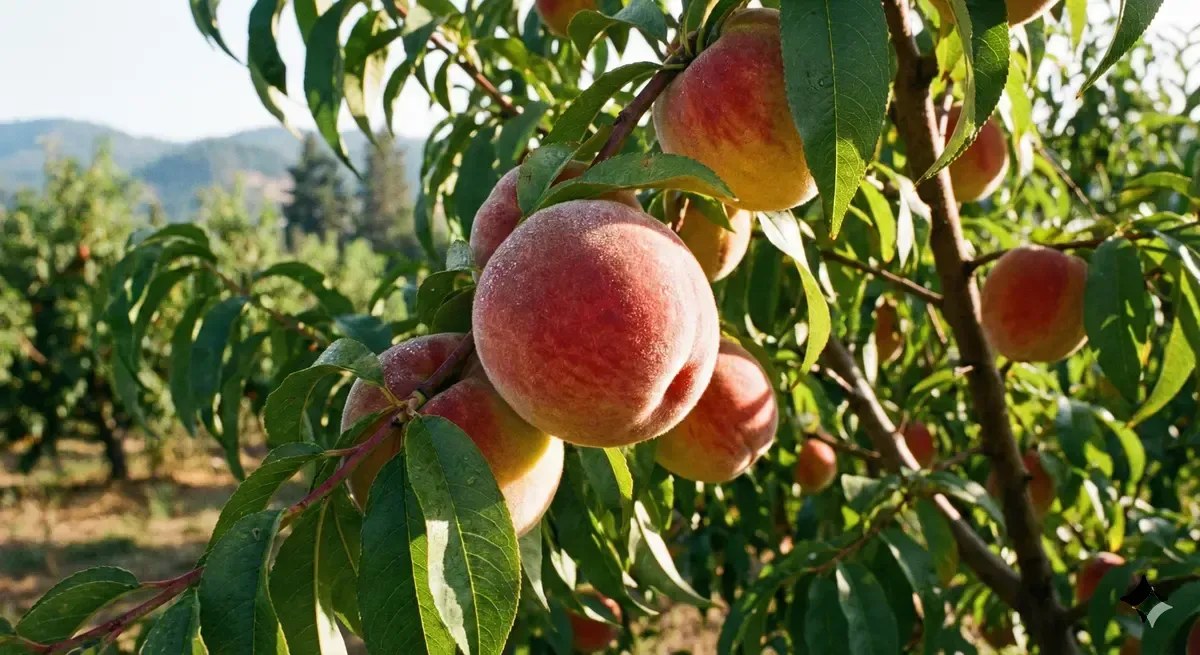
Prune peaches like apples and you will learn the hard way that stone fruits play by different rules. The winter pruning window that works for apples and pears is exactly when peach trees are most vulnerable to disease. Winter cuts invite bacterial canker, dieback, and branch death that could have been avoided with proper timing.
Peaches demand spring pruning — after buds swell and the tree is visibly waking up. This timing protects against disease, lets you assess winter damage, and aligns with the peach’s growth habit of fruiting on one-year-old wood. For most US growers in zones 6-8, this means February through March. In colder zones 4-5, wait until April.
Key Difference
Peaches are pruned in spring, not winter. This is the opposite of apples and pears. If you prune peaches during the dormant season, you significantly increase the risk of bacterial canker and other diseases entering through fresh wounds.
Why peaches need spring pruning
Peach wood is soft and vulnerable. A winter pruning cut stays open and wet for weeks. Cold, damp conditions are ideal for bacterial canker (Pseudomonas syringae), which enters through cuts and causes branches to die back. The infection spreads through the cambium layer, girdling branches and killing everything beyond the infection site.
Winter wounds heal slowly because the tree is dormant. There is no active growth to seal the cut, no callus tissue forming to protect the exposed wood. By the time spring arrives, the damage is done.
Spring pruning solves this. When you prune after bud break, the tree is actively growing. Sap is flowing, cells are dividing, and wounds seal quickly. A cut made in March will have visible callus tissue within days. The same cut made in December might still be raw and weeping in February.
Peaches also fruit on one-year-old wood, which means you need a constant supply of new shoots. The fruiting wood from this year will not fruit again next year — it needs to be replaced. This is fundamentally different from apples, which fruit on spurs that produce for several years. Peach pruning is about renewal, not just shaping. You are removing old fruited wood and making space for the new growth that will carry next year’s crop.
Regional timing by USDA zone
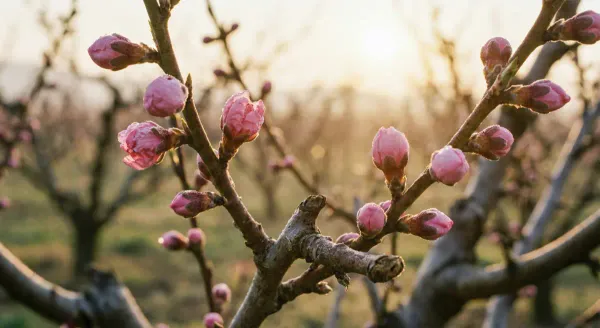
The signal to prune is bud swell. Watch your peach tree in late winter. The buds will start to fatten, then show colour — usually pink or red depending on the variety. This is bud break, the moment when the tree transitions from dormancy to active growth.
Zones 8-9 (Georgia, South Carolina, coastal California, Texas): Prune in late January through February. These regions have mild winters and early springs. Varieties like Belle of Georgia and Elberta wake up early, and you need to prune before they are in full growth. Watch for bud swell in mid-January.
Zones 6-7 (North Carolina, Virginia, Tennessee, Arkansas, southern Missouri): Prune in late February through March. This is the heart of US peach country. Varieties like Redhaven and Contender are bred for these zones. Wait for consistent warming and visible bud swell before pruning.
Zones 4-5 (Michigan, upstate New York, northern states): Prune in April. Cold-hardy varieties like Reliance and Contender can handle the late springs in these zones. Wait until buds are clearly swelling and showing pink. A late frost can kill swollen buds, so timing matters.
The biological signal overrides the calendar. If your buds are still tight and brown in mid-March, wait. If they are swelling and showing pink, prune. A late spring means you prune later. An early warm spell means you prune earlier.
The ideal timing window
Prune after bud break but before full bloom. This window gives you several advantages. First, you can see which buds survived the winter. If you have had a cold snap in January, some buds will be dead. Waiting until they swell lets you identify the live wood and prune accordingly.
Second, the tree is growing but not yet flowering. You avoid damaging blossoms, which matters if you want fruit. And you are pruning at a time when the tree can heal quickly, sealing wounds before disease can establish.
Third, this timing aligns with peach leaf curl management. Your fungicide spray schedule and your pruning window overlap. You can prune, then spray, and cover both jobs in one visit to the tree.
The exact dates vary by climate, but the biological signal is the same everywhere. Swelling buds showing pink means it is time to prune.
Tools You'll Need
Sharp bypass secateurs are essential — peach wood is softer than apple, so clean cuts are easy if your blades are sharp. You will also need a pruning saw for larger scaffold work and loppers for reaching into the centre of the vase shape. Keep sterilising solution on hand. Peaches need aggressive annual pruning — up to 40 percent of growth — so sharp tools make the job faster and less tiring.
Peach leaf curl and pruning timing
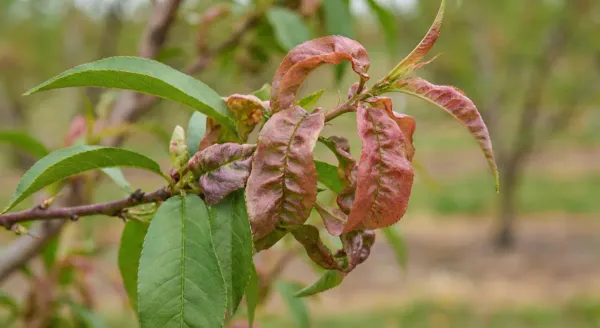
Peach leaf curl is a fungal disease (Taphrina deformans) that causes leaves to blister, thicken, and turn red. Severe infections weaken the tree and reduce fruiting. The fungus overwinters on the bark and infects new leaves as they emerge in spring.
The standard control is a copper-based fungicide applied in late winter, just before bud break. You spray once in January or February, then again two weeks later. This protects the emerging leaves during the vulnerable period when they are unfurling.
Your pruning window sits right in the middle of this spray schedule. You prune after the first spray but before the leaves fully open. This means you can assess the tree’s structure while the buds are visible, make your cuts, then apply the second spray to cover any fresh wounds.
If you prune in winter, you miss this alignment. You are cutting before the spray window, which means wounds are exposed for weeks before you apply fungicide. And you are pruning blind, without being able to see which buds are alive.
Spring pruning and peach leaf curl management are not separate jobs. They are part of the same seasonal workflow, timed to the tree’s biology.
The open vase shape for freestanding trees
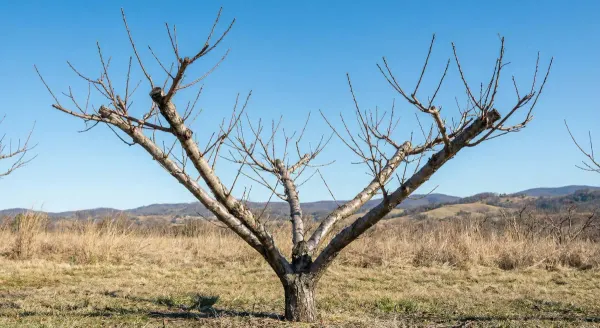
Peaches are trained to an open centre, also called a vase or goblet shape. This is the standard form for commercial and home orchards across the US. Instead of one main trunk with horizontal branches, a peach has three or four main scaffold branches rising from a short trunk at about 30-45 degree angles, creating an open bowl.
The open centre lets light and air into the middle of the tree. This matters for peaches because they fruit on one-year-old wood scattered throughout the canopy. You need light penetration to ripen fruit on interior branches, and you need air circulation to reduce fungal disease — critical in humid southeastern states where peaches are a major crop.
When you prune, you are maintaining this shape. Remove any shoots growing into the centre. Cut out crossing branches that will rub and create wounds. Shorten the tips of scaffold branches to encourage lateral growth. The goal is a tree that looks like a wine glass when viewed from the side — open in the middle, with fruiting wood spread around the rim.
This shape also makes the tree easier to manage. You can reach most of the fruit without a ladder, and you can spray for pests and diseases more effectively. In commercial orchards, the open vase allows for efficient harvesting and better fruit quality.
Annual pruning is essential. Peaches grow vigorously, and without pruning they become dense, shaded tangles. You need to remove about 40 percent of the previous year’s growth every spring. This sounds brutal, but it is necessary. You are cutting out the wood that fruited last year and making room for the new shoots that will fruit this year.
Popular varieties like Elberta, Redhaven, and Belle of Georgia all respond well to this aggressive pruning. They produce vigorous new growth each season, which is exactly what you want for next year’s crop.
Variety-specific considerations
Different peach varieties have slightly different growth habits, but the spring pruning timing remains the same. Elberta, one of the oldest and most widely planted varieties, is vigorous and needs hard pruning to keep it productive. Redhaven, bred in Michigan and now grown across the US, is slightly more compact but still requires annual thinning of old wood.
Belle of Georgia, a white-fleshed variety popular in the Southeast, tends to set heavy crops and benefits from aggressive pruning to prevent branch breakage. Contender, a cold-hardy variety for northern zones, produces moderate growth and can handle slightly less severe pruning than southern varieties.
Regardless of variety, the principle is the same: remove old fruited wood, maintain the open vase shape, and encourage new growth for next year’s crop.
Fan-trained peaches (UK and specialty growing)
Wall-trained peaches are uncommon in the US but traditional in the UK and parts of Europe, where the extra warmth from a south-facing wall makes the difference between a crop and no crop. These trees are trained as fans, with branches spread horizontally and tied to wires.
Fan-trained peaches are pruned twice a year. The spring prune (March to April in the UK) is for structure. You select the shoots that will carry fruit, remove unwanted growth, and tie in new wood to fill gaps in the fan. The summer prune (August to September) happens after harvest. You cut out the shoots that carried fruit and tie in replacements.
This two-prune system maintains the fan shape and ensures a constant supply of young fruiting wood. It is more work than pruning a freestanding tree, but necessary for wall-trained forms. For most US growers working with freestanding trees, the single spring prune is sufficient.
Month-by-month pruning calendar
| Month | What to Do |
|---|---|
| January | Too early in most zones. Apply fungicide spray for peach leaf curl in mild regions. |
| February | Pruning begins in zones 8-9. Watch for bud swell as your signal. |
| March | Main pruning window for zones 6-7. Prune after buds swell but before full bloom. |
| April | Pruning window for zones 4-5. Last chance before bloom. |
| May-June | No pruning. Thin fruit if the tree sets heavily. |
| July-August | No structural pruning. Tie in new shoots on fan-trained trees. |
| September-December | No pruning. Bacterial canker risk is high in cold, wet weather. |
Common mistakes
The biggest mistake is winter pruning. It is tempting to prune peaches at the same time as apples, especially if you have both in the same garden. But peaches are not apples. Winter wounds invite disease, and the risk is not worth the convenience.
The second mistake is not pruning hard enough. Peaches need aggressive annual pruning. If you only tip the branches or remove a few crossing shoots, the tree becomes congested. You need to remove about 40 percent of last year’s growth. This feels drastic, but it is necessary for fruit production and tree health.
The third mistake is ignoring peach leaf curl timing. If you prune before applying fungicide, you are leaving fresh wounds exposed during the infection window. If you prune after the leaves have opened, you have missed the chance to assess bud survival and you are cutting into active growth.
The fourth mistake is pruning too late. If you wait until the tree is in full leaf, you are removing photosynthetic capacity and stressing the tree. You also cannot see the structure clearly, which makes it harder to make good pruning decisions.
After you prune
Do not apply wound paint. Peach wounds heal quickly in the spring warmth, which is one reason spring pruning works so well for this species. The tree’s natural callus formation is faster and more effective than any sealant.
If you have not already applied a fungicide spray for peach leaf curl, do it now. The pruning window overlaps with the spray window, and freshly pruned trees benefit from protection. Your cuts are fresh, the buds are swelling, and this is exactly when the fungus is looking for entry points.
Water well if spring is dry. Peaches are pruned harder than most fruit trees, and the vigorous regrowth needs moisture. A dry spring after heavy pruning stresses the tree and reduces the quality of new shoots. If you are not getting regular rain, give the tree a deep soak every week or two.
Thin fruit in late spring or early summer if the tree sets heavily. Peaches that are not thinned produce small, poor-quality fruit. Remove excess fruitlets to leave one every 15-20cm along the branch. This sounds wasteful, but the remaining fruit will be larger, sweeter, and worth eating.
What to record
Keep a record of when you prune, what you remove, and how the tree responds. Note the date, the bud stage, and the weather conditions. Record which branches you cut and why. Take photos before and after.
This information is invaluable for future years. You will learn the specific timing that works for your tree in your climate. You will see patterns in growth and fruiting. You will know whether you pruned too early or too late, too hard or not hard enough.
A fruit tree pruning log helps you track this information systematically. If you are managing multiple trees, Leaftide’s permanent plant profiles let you record each tree individually with its own pruning history and observations.
Never forget when you pruned
Free for up to 30 plants. No card needed.
Sources
This article draws on guidance from Clemson Cooperative Extension’s peach pruning and training resources, University of Georgia Extension’s commercial peach production guide, and Penn State Extension’s tree fruit production guide. These land-grant universities serve the major peach-growing regions of the southeastern and mid-Atlantic US.
For peach leaf curl management, the Royal Horticultural Society provides detailed guidance on disease identification and control, applicable to growers worldwide.
Peach trees are unusual among fruit trees in needing spring pruning. For winter-pruned trees, see our guides on when to prune apple trees and when to prune pear trees. For summer-pruned stone fruits, see when to prune cherry trees and when to prune plum trees.